

Diesen Beitrag im deutschen Original lesen
After we had seen enough of the wonder of the world in Agra, we took the train to Jaipur, this time without incident. There were no dead bodies in the sleeper car, the departure was on time and there was plenty of delicious chai, which the travelling traders never get tired of advertising. I can still hear their mesmerising chant in my dreams at night: „Chai, Chai, Chai, Chai, Chai….“
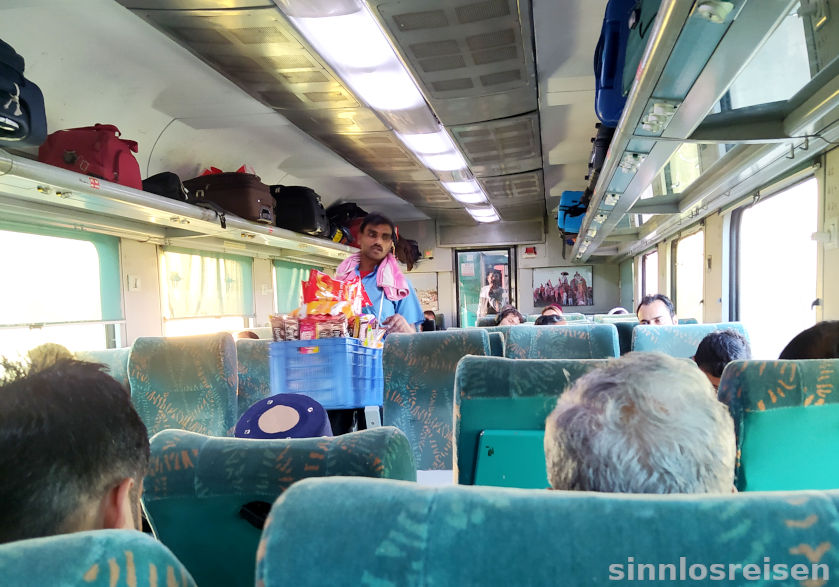
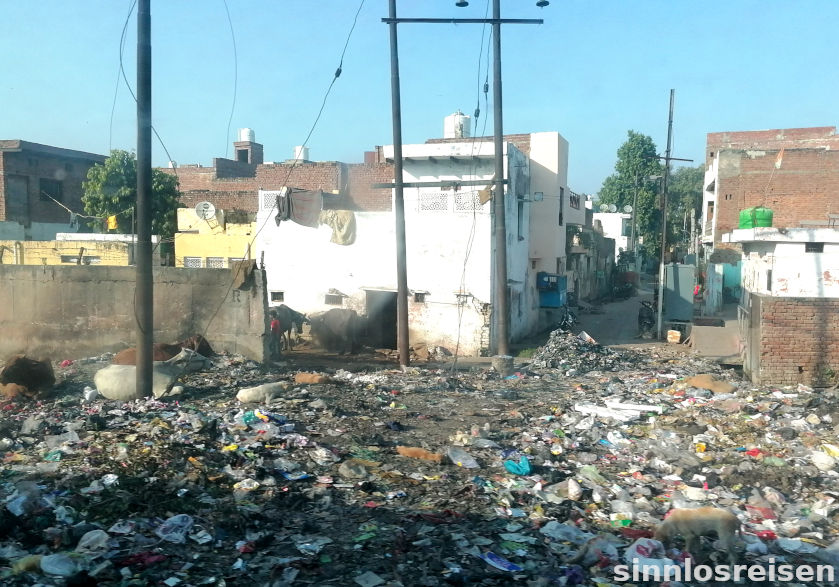
Travelling educates, they say. At least travelling by train gives you an unobstructed view of the country and its people. This is not always advantageous even on German railway lines, but in India you see things you don’t want to see: families with small children sleeping in the abandoned side track while someone is doing their big business beside them. Endless metre-high mountains of rubbish in which children, dogs and cows poke around for something to eat. And all this is overlaid by a beastly stench of burning and decay. You think I’m exaggerating? Then take a look at the video on Youtube that Mrs. SinnlosReisen recorded.
The Royal City 0f Jaipur
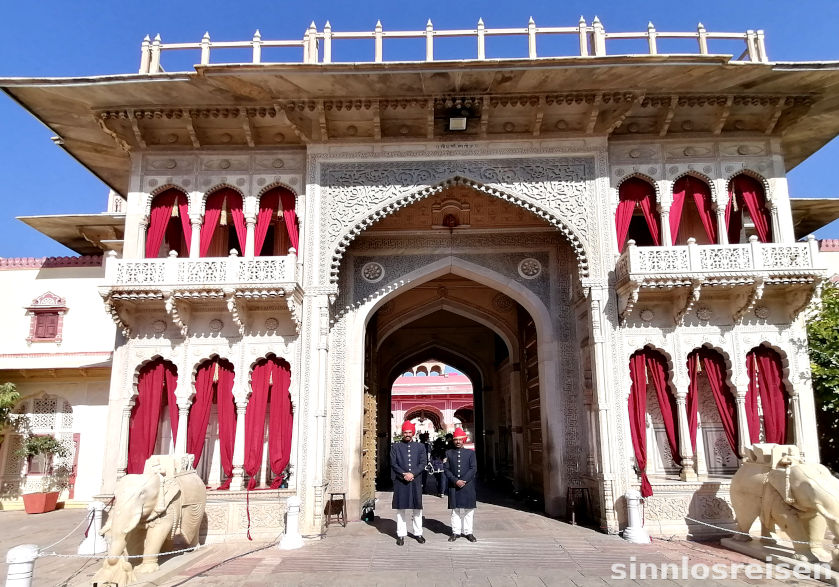
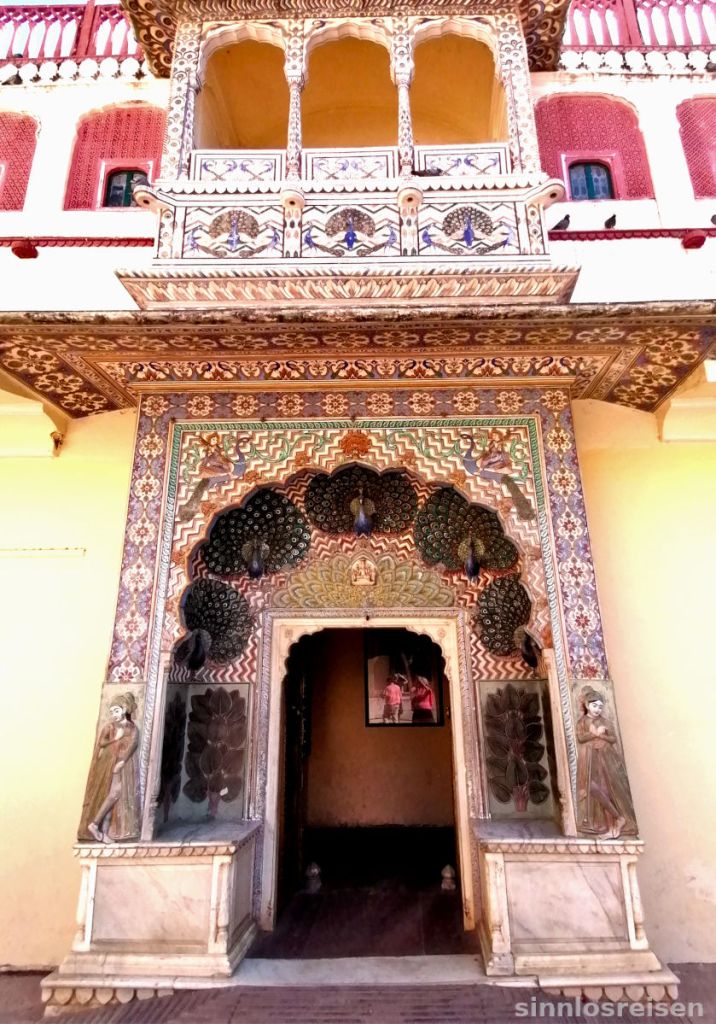
The old city of Jaipur was completely painted in pink, the colour of hospitality, in the 19th century. The reigning Maharaja thought it appropriate for the visit of Prince Albert and Queen Victoria. Even today, it is forbidden by law to paint a house in the Pink City any other colour.
Hawa Mahal – Palace of the Winds
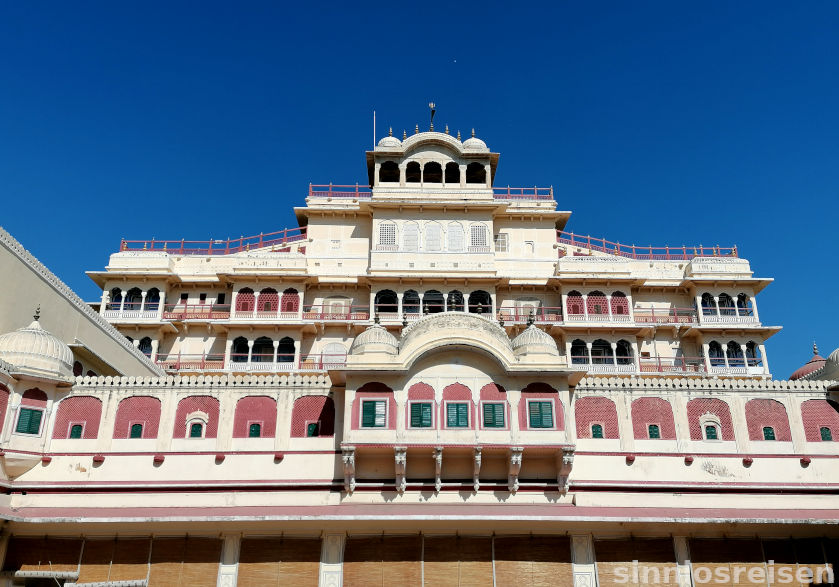
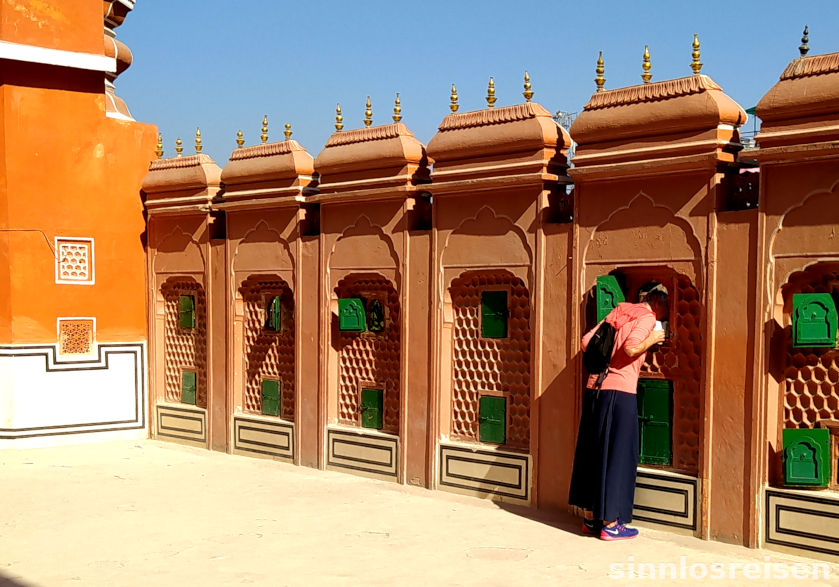
Next to the Royal Palace, the Palace of the Winds with its bay windows is probably the most striking building in the city.
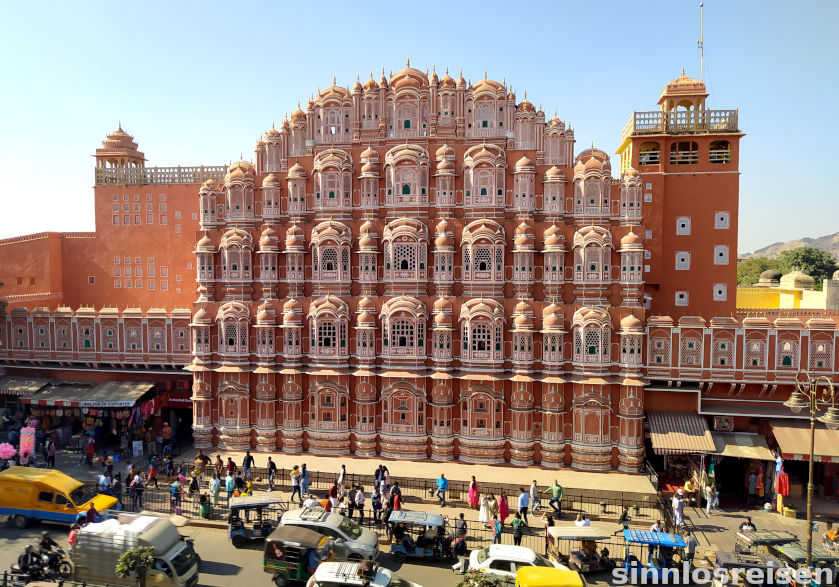
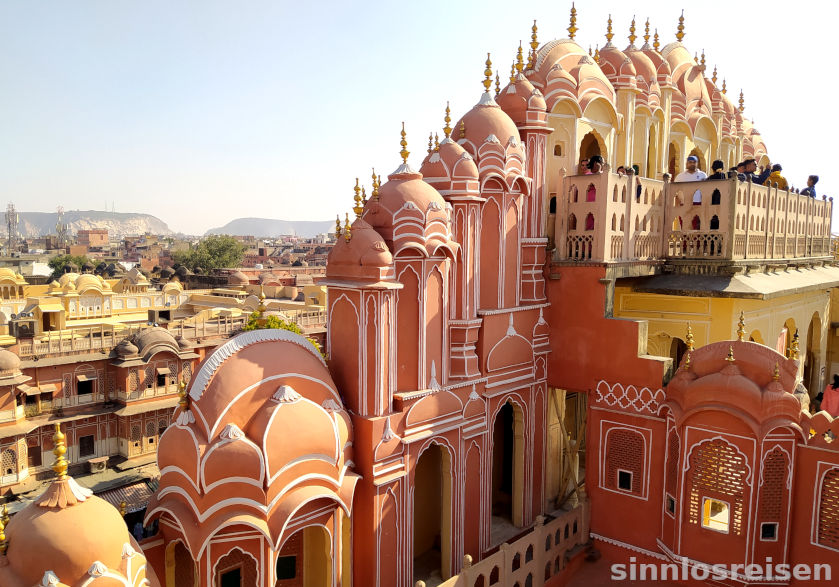
Yet the palace is not really a palace at all, as a look behind the scenes shows. Not much is hidden behind the pretty façade. The whole building served the court ladies to watch the hustle and bustle on the street without being recognised.
Amber Fort
In Jaipur, we joined up with tour group No. 3 and booked a vehicle at the hotel for the next day. When the driver did not show up at the agreed time, I asked at the reception. After a short phone call, I received the answer: „Sir, the driver will be here in two minutes“.
„Two minutes“ is a common time indication in India, almost always given when asked how long something will take. I have stopped it several times: two Indian minutes correspond to between seven and twenty-five German minutes. What is meant here is rather noncommittal information like „the cook has already started reading your order and will soon send the kitchen boy to the market to do the shopping“.
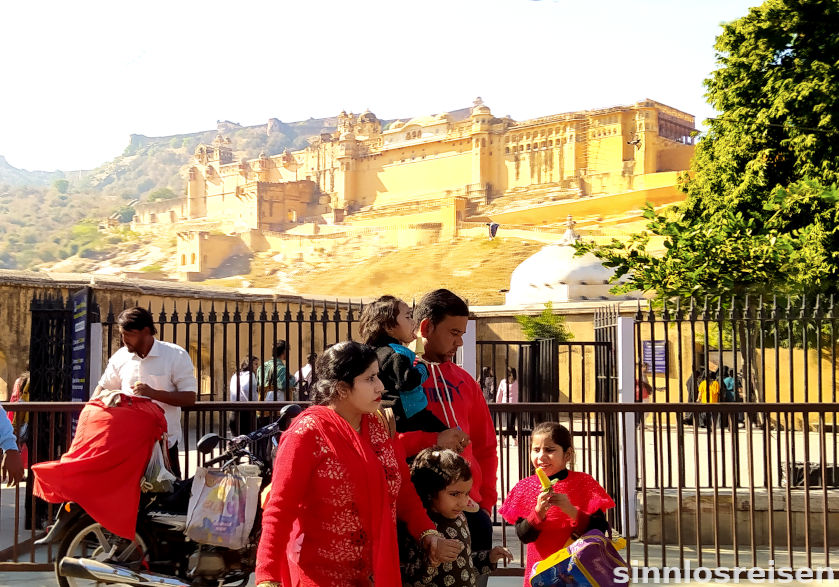
Before leaving, I negotiated with the driver that he would not arrange guides for us or take us to any shops, no matter how sensationally cheap the jewels, carpets or clothes might be (only today on special offer!). He grimaced painfully, but finally agreed. Then we made our way to the Amber Fort, a historic fortification.
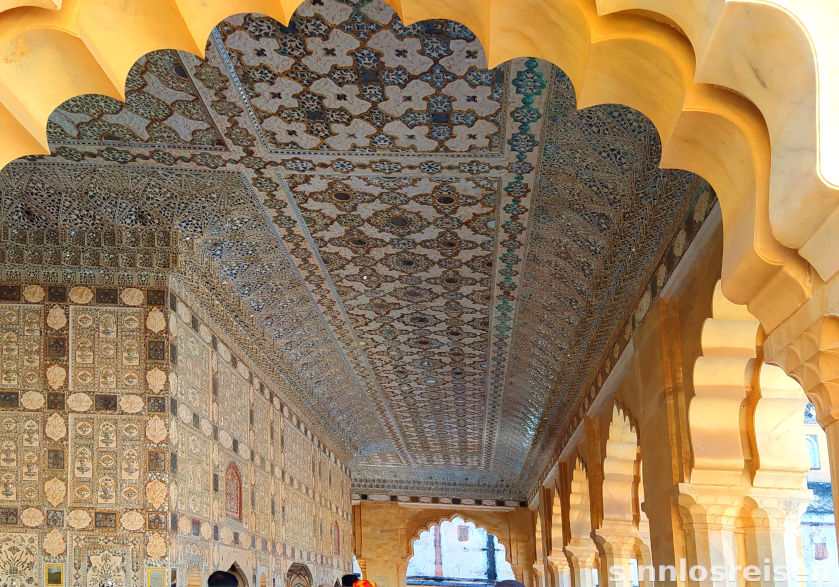
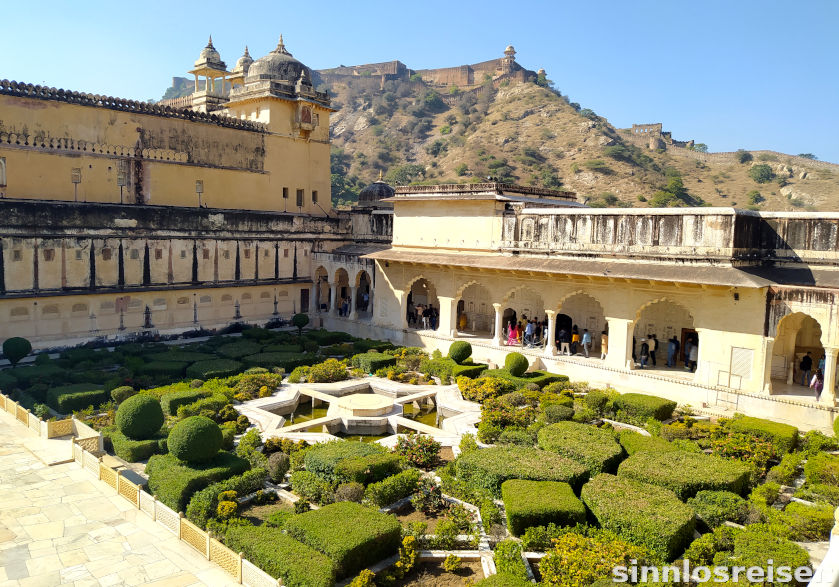
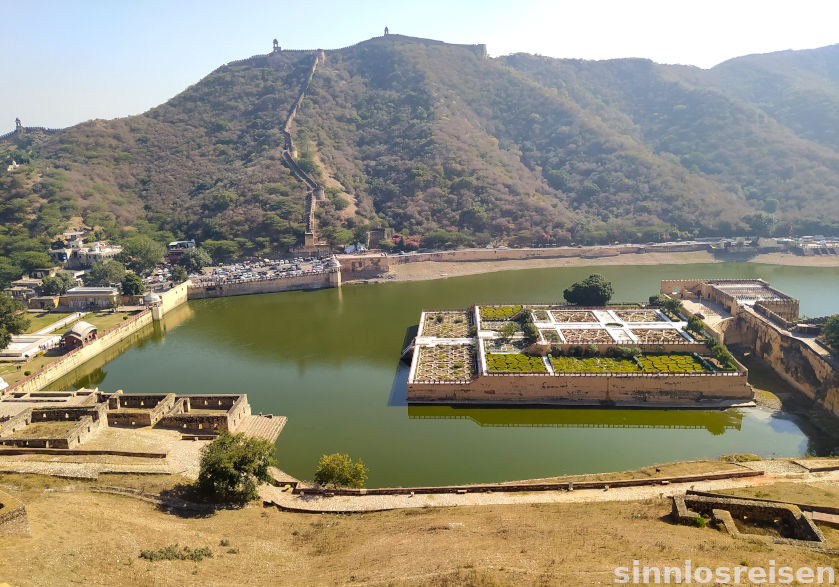
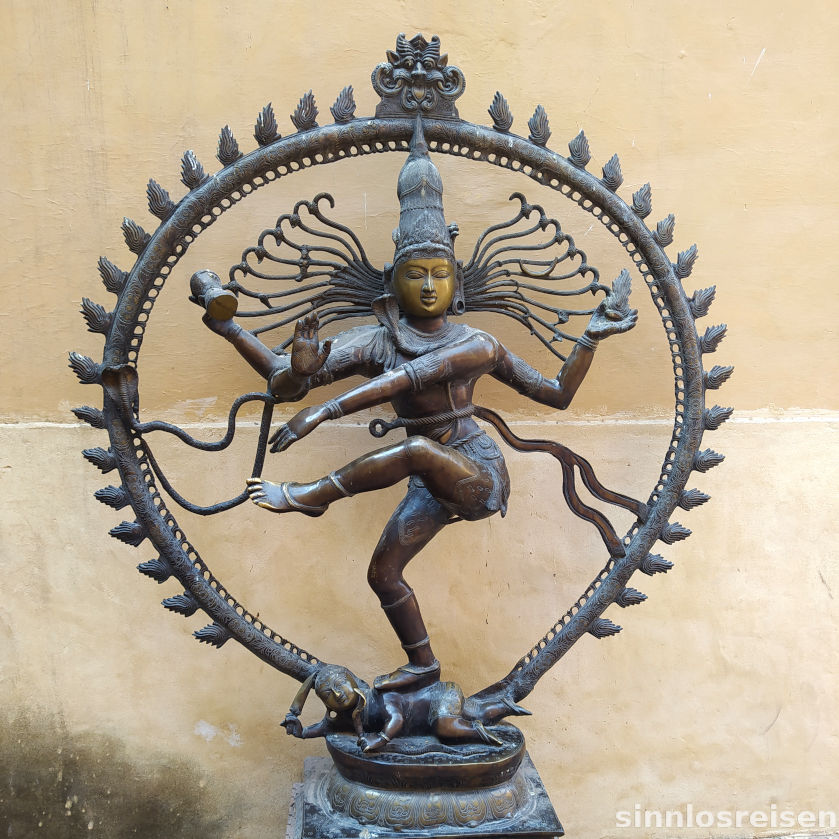
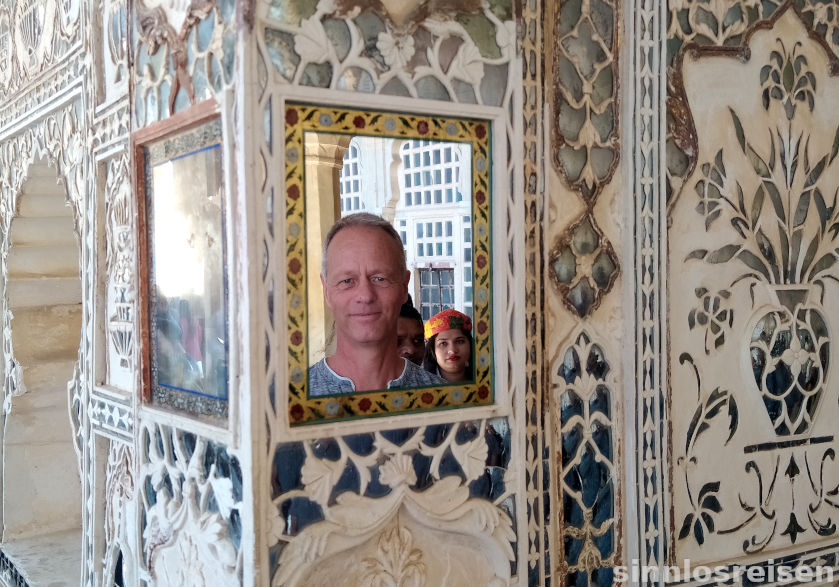
Within the mystical walls of the old palace there is a mirror that is said to have magical powers. If you look into it with a pure heart, you will recognise your true personality, says the legend. I tried it out and was surprised. Maybe I should make an appointment with a psychiatrist. With a specialist for multiple personality disorders.
Galtaji – The Monkey Temple
On the way to the Monkey Temple we passed the Jal Mahal, the „drowned water palace“. History books show that the reservoir was built long before the hunting lodge was built. Why anyone would build their castle in the middle of a reservoir is beyond me; perhaps they should have asked Venice for advice beforehand.
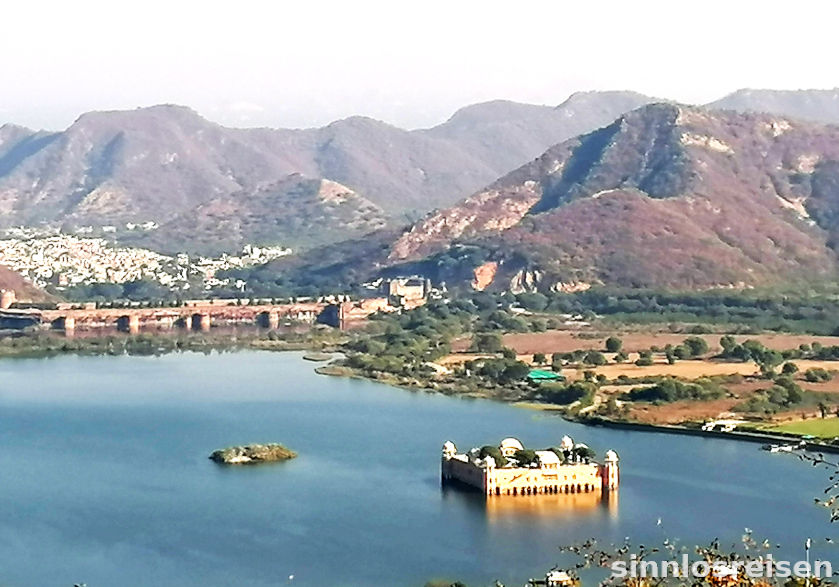
The Monkey Temple is a Hindu temple that was built into a mountain pass as early as the 15th century. For a long time, influential yogis and ascetics lived here with their disciples, and over the centuries an entire temple complex was built. Pilgrims still travel long distances to bathe in the seven sacred ponds. Today, the complex is falling into disrepair and legions of monkeys populate the grounds.
You can enter the temple complex through a large entrance gate. Then you have to hike two kilometres along a mountain path and get free admission.
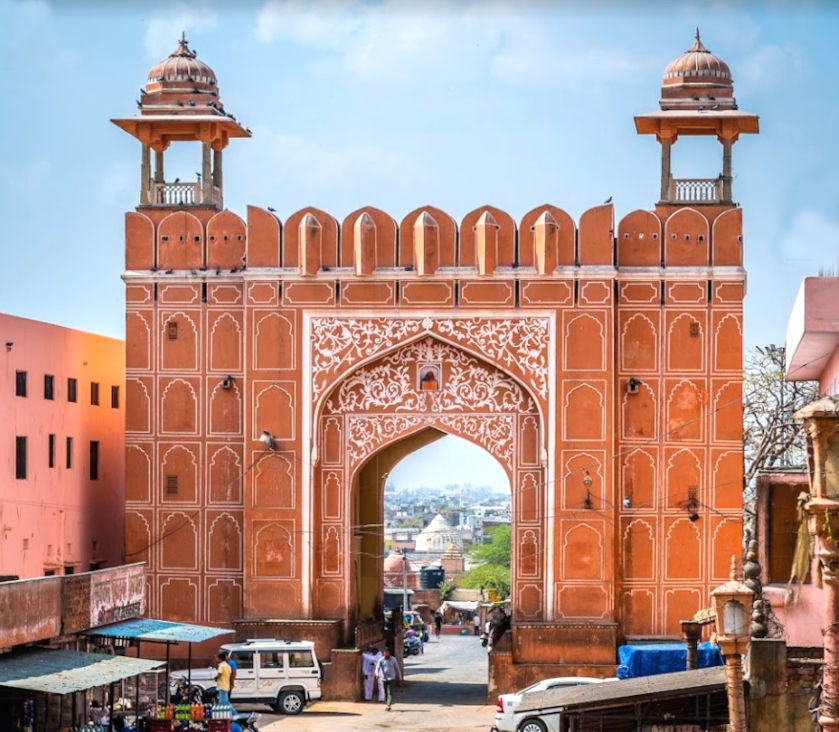
We let our driver take us around the mountain to the back entrance. There, a unique rip-off awaits the curious tourist. Although I had made the driver swear on his mother’s grave that he would not arrange guides for us, he now strongly recommended that we be accompanied by an expert waiting at the entrance. Because the monkeys are extremely dangerous and unpredictable. „He’s not a guide, he’s the Monkey Man. He will protect you,“ the driver explained to us, causing his mother to twitch nervously in her grave.
We accepted the non-guide and paid the free entrance fee of 150 rupees per person. Needless to say that we didn’t get enough change. Bizarre detail on the side: for each mobile phone, the rip-off artists in their fake ticket booth charged an extra 200 rupees. That is so outrageous that it is almost admirable.
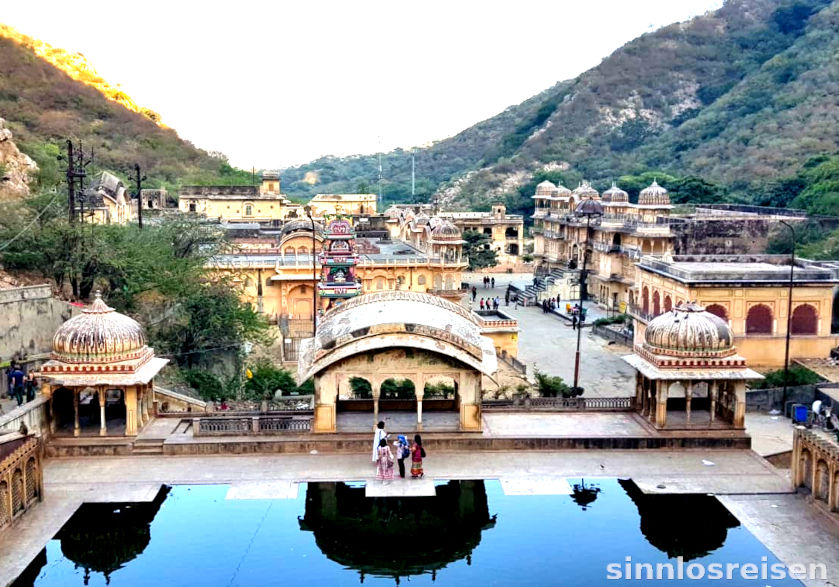
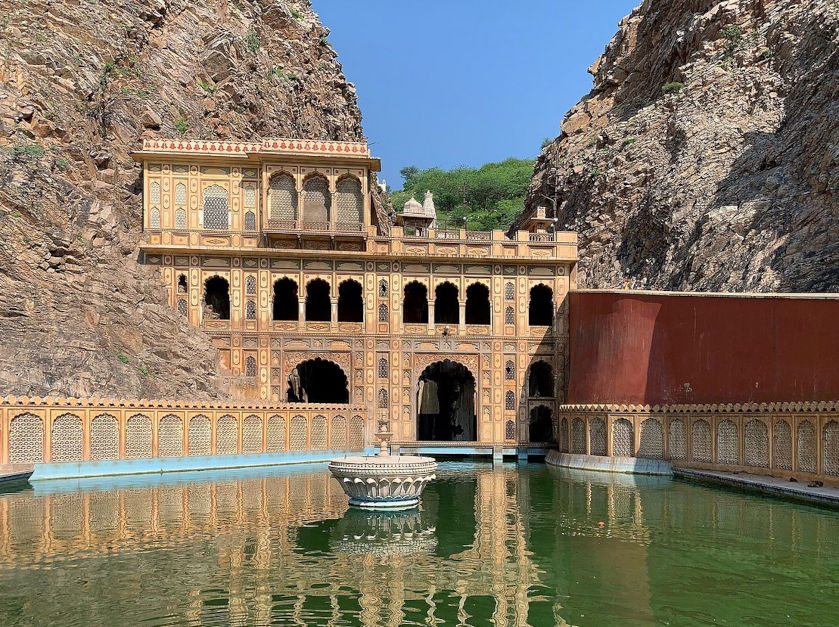
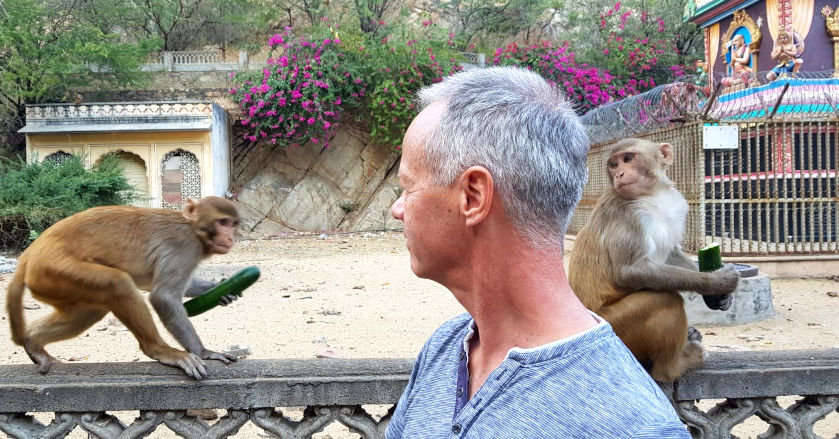
The final result was that our non-guide-monkey-man gave us a one-hour non-guided tour with many interesting explanations for the equivalent of €10. And we were allowed to be up close and personal with the feeding of the monkeys. Very close.
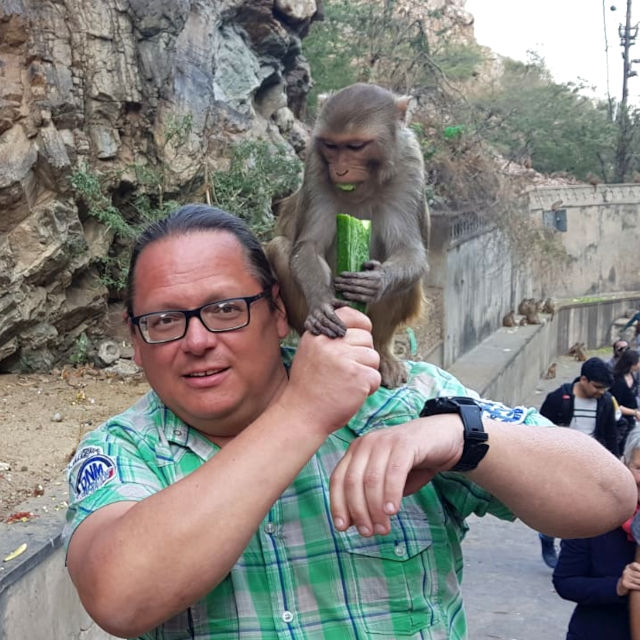
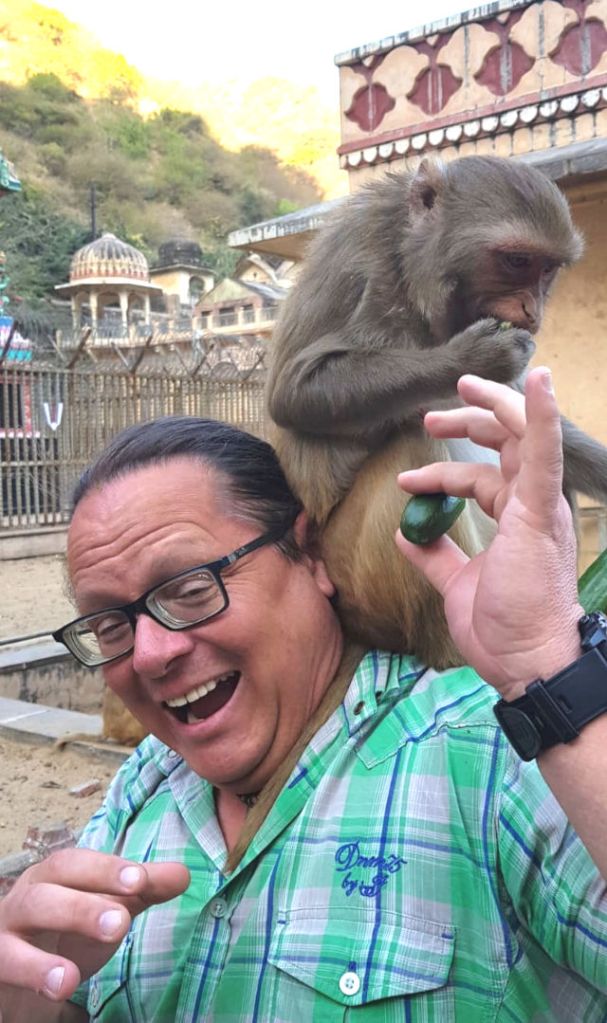
When we returned to the car park and our non-guide wanted to collect his commission for the second time, even the good-natured Charly was fed up. We let ourselves be driven to the hotel, where we booked a transfer to the airport for the next day. There we were ripped off again, but we already were in celebration mood by then, looking forward to the wedding.
 Sinnlos reisen