

Diese Seite im Deutschen Original lesen
So now the time had finally come. The four travel groups from Germany arrived in Surat after different experiences on the journey. All gastrointestinal problems were overcome and the celebrations could begin.
Shopping Tour
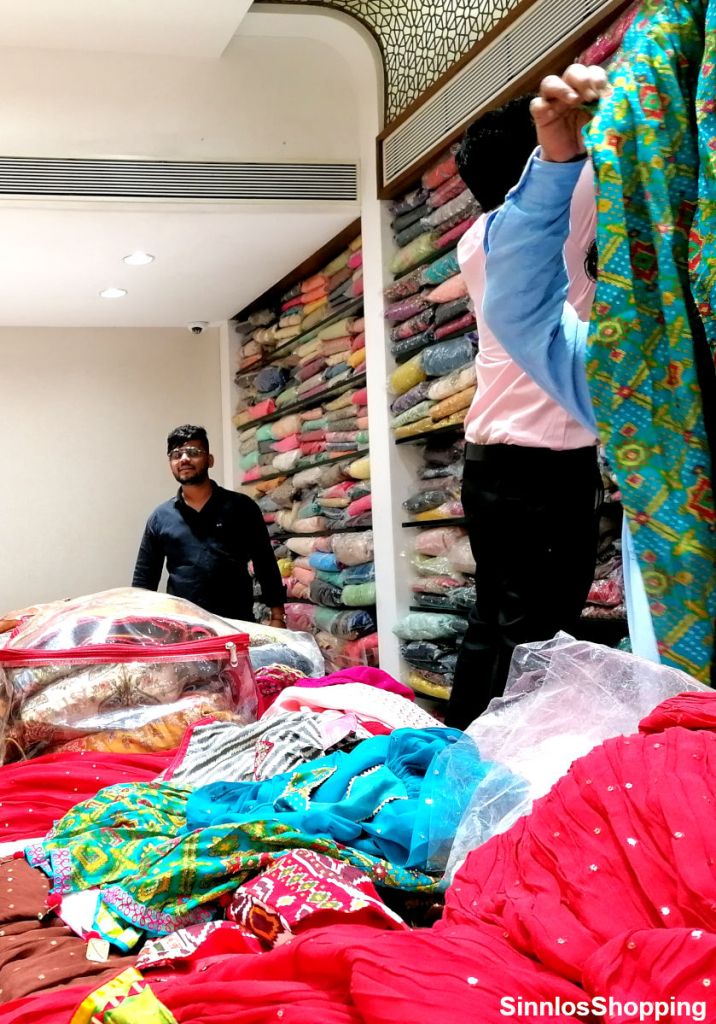
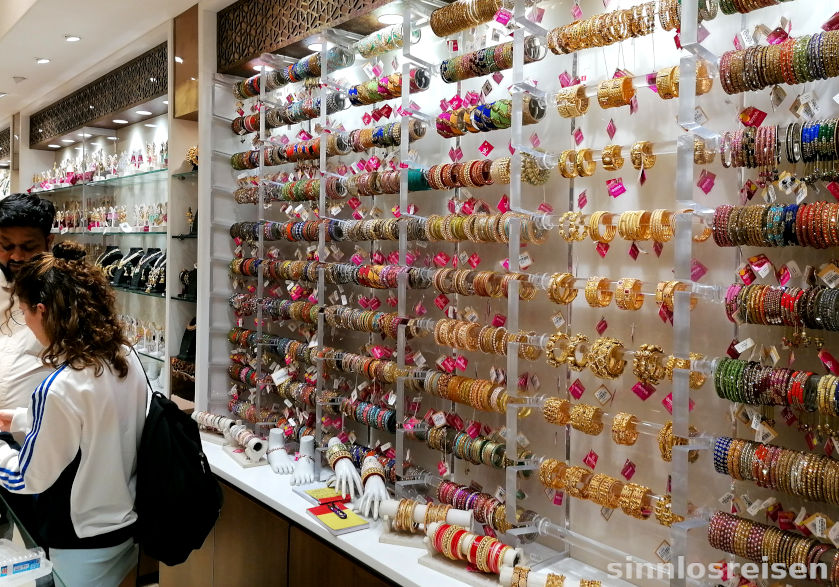
On the eve of the celebration, shopping was on the agenda. Bhargesh and Yesha took us to the specialised shops and with endless patience advised us on the traditional outfit. While in German clothing shops you often have the feeling that you are a nuisance to the sales staff, in India you are virtually showered with service. The shop assistants patiently pulled hundreds of dresses from the racks as soon as our eyes even passed over them. Special sizes in length and girth were no problem – by the next noon, the customised kurtas were delivered to the hotel. A practical detail: for men, there were standardised pantaloons that could be adjusted to any waist circumference with a band.


The Haldi Ceremony
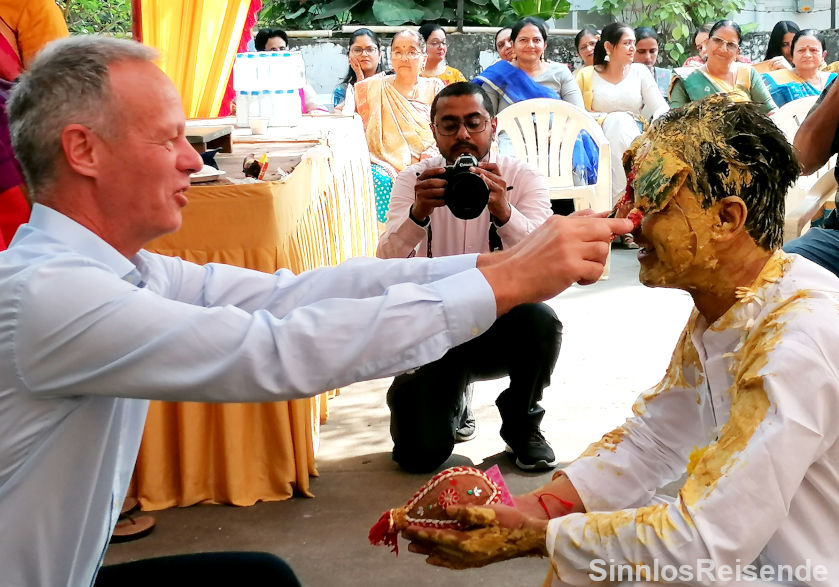
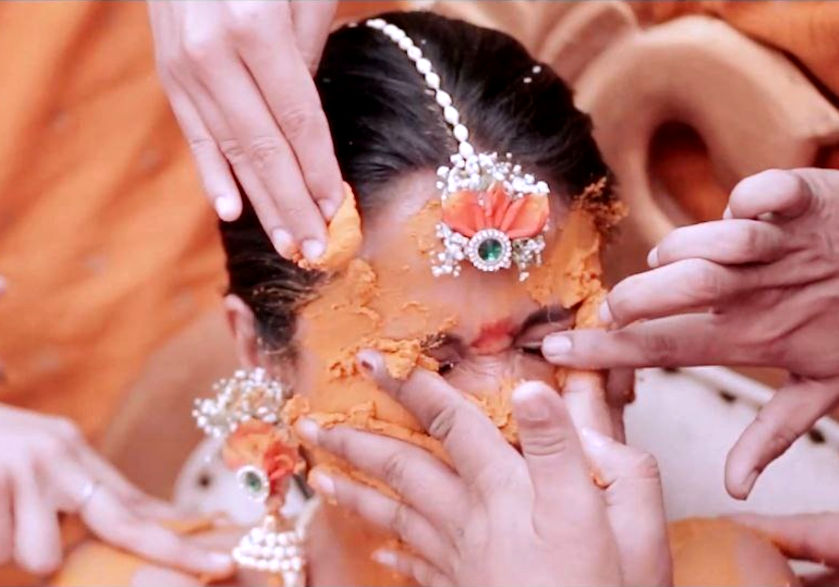
The three-day wedding celebration began with the haldi ceremony. In former times people used to cleanse their skin with turmeric paste for the big event. This developed into a tradition where families paint the bride and groom according to certain rituals. Since Indian families are very large, this can become quite a mess.
Pre Wedding Dinner
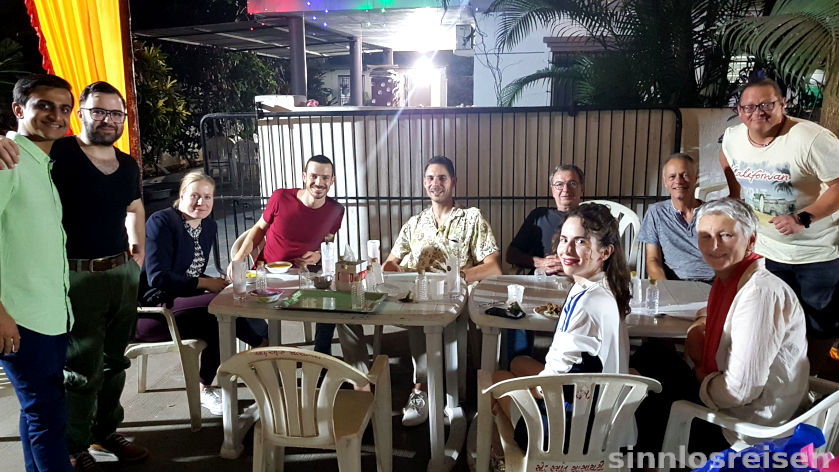
As the ceremony took place in the state of Gujarat, a 100% vegetarian meal without alcohol awaited us at the pre wedding dinner. Of course, these were brilliant conditions for us vegetarians, as it saved us the constant questions when choosing food.
Indian weddings are „held“ in special venues, which are classified in multiples of K. A wedding venue of category 1K holds up to 1,000 guests, 2K allows 2,000 guests, etc. We celebrated in an arena whose entrance was impossible to miss.
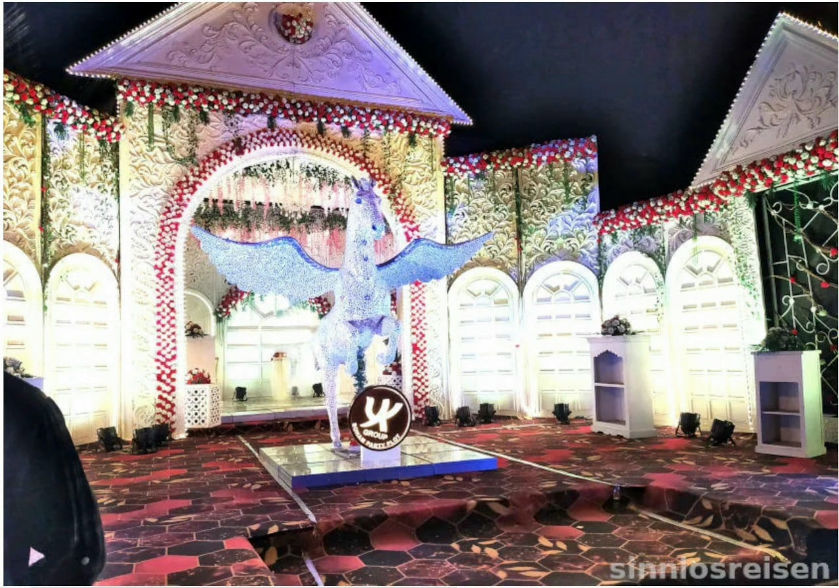

We had been warned in advance that the times on the invitation were not to be taken so seriously in India. But after some discussion, a majority of our group decided that they didn’t want to be late in the middle of an ongoing ceremony. So, to be on the safe side, we arrived exactly at the time indicated. German punctuality conquers the world.
With eager anticipation, we walked through the Rose Pavilion, winning smiles on our lips, scarves draped correctly around our kurtas. Inside, a party area the size of a football field awaited us. We could pack away our smiles again, because we were the only guests. Only a few waiters were bored on the lawn and looked over at us in surprise. I guess in India it’s good manners to be late. Much later.
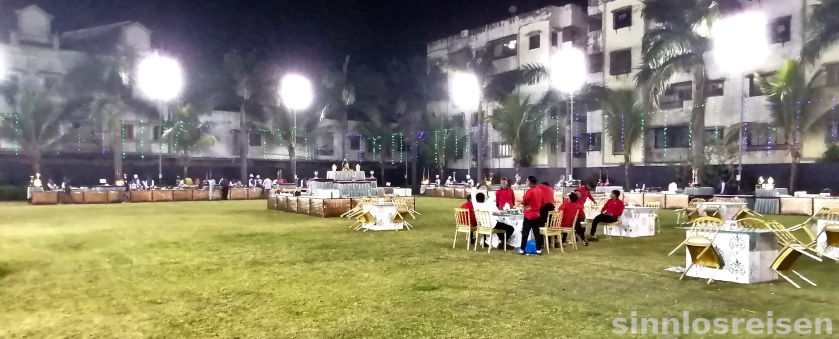
As the other guests began to arrive, I noticed that we were the only ones wearing these traditional shoes. All the Indians were wearing sneakers. Anyway, at least the children had something to laugh about.
The buffet stretched over 150 metres and was stocked with exquisite delicacies. I would have taken Indian citizenship for the Mango Delight in roasted cashew nut cream alone.
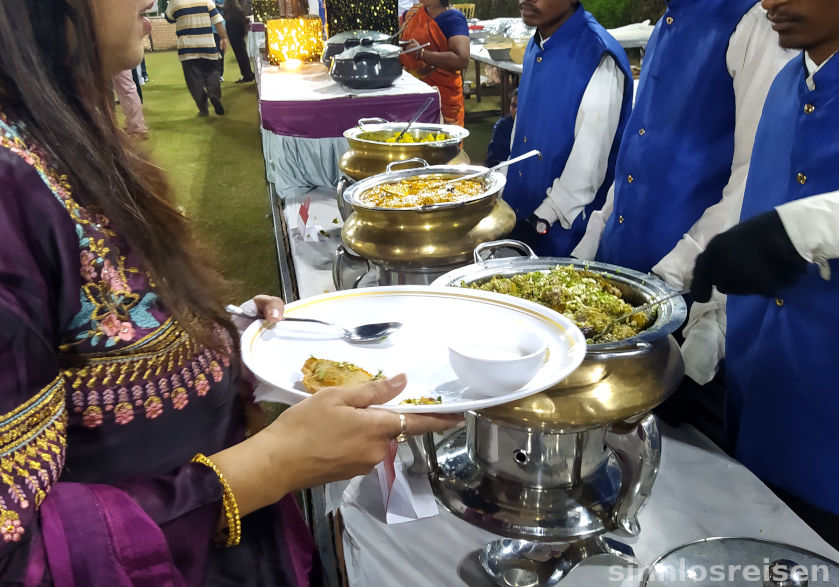
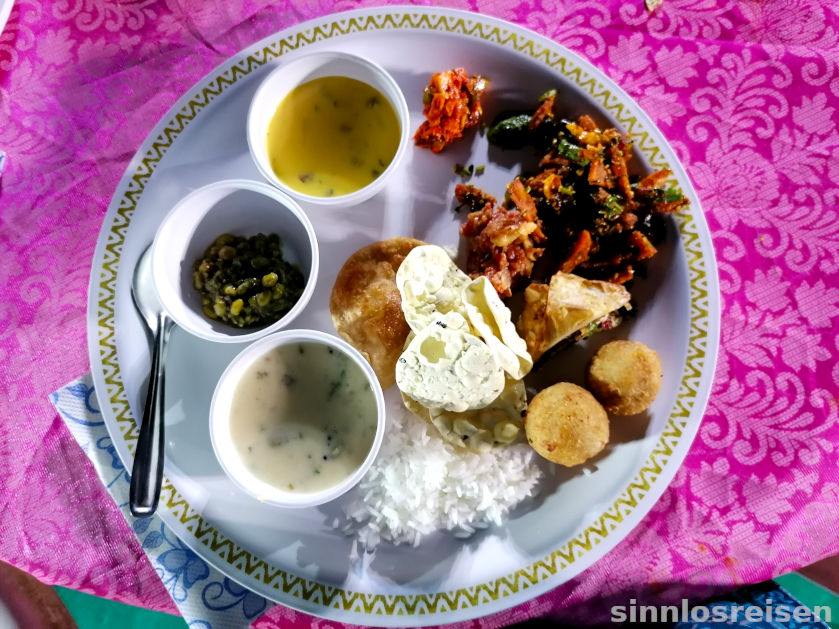
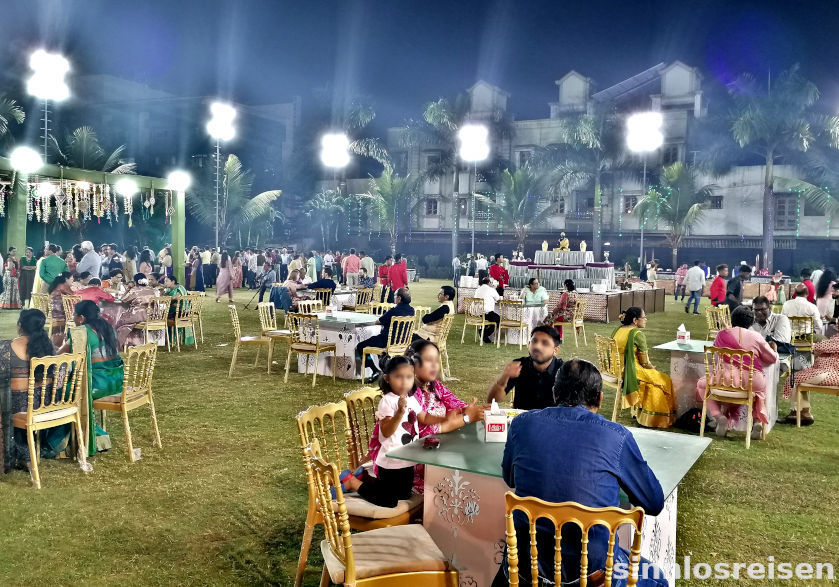
The dishes outdid each other in taste and I regretted that I only had one stomach. I had to loosen the waistband of my harem trousers several times. Only the dessert at the very end tasted a bit disgusting. There was kulfi, a kind of Indian ice cream. Next to it in the semi-darkness were some bowls with crumbles; I already knew that from the frozen yoghurt in Ravensburg. As I sprinkled the crumbs generously over my ice cream, the employee behind the counter waggled his head wildly in a strange rubberband movement. I guessed that this must mean something, but I didn’t get any clear answers to my questions.
The taste reminded me of a mixture of bitter herbal liqueur and liquorice sweets with a hint of kebab. I left the half-full cup discreetly on a small table. Later I found out that the crumbles were mukhwas, a kind of mouthwash for chewing made from caraway seeds, liquorice and some harsh-tasting herbs as a digestive aid. You always learn something new when you travel.
The second day- Sangeet
On the second day, I gradually lost track of the sequence and significance of the individual events which took place at changing locations and with a flexible time schedule. The incredibly complex paintings of the bride with henna alone takes longer than in other countries a complete wedding including separation and divorce litigation.
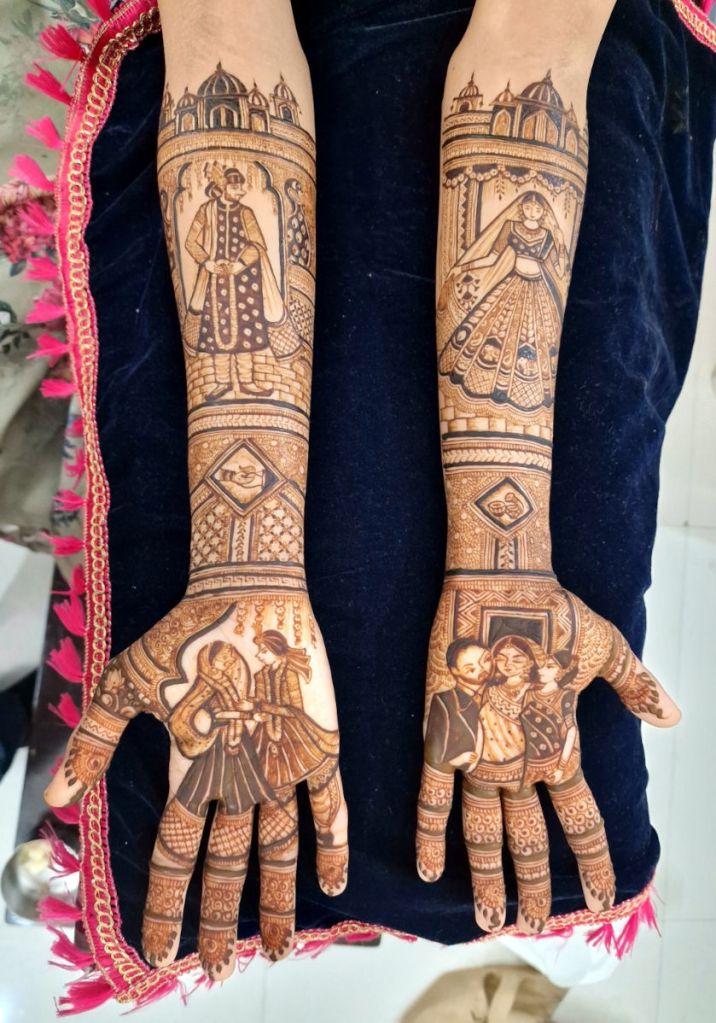
In any case, the Sangeet took place in the evening, a bombastic celebration with music and show acts. We had learned from the previous evening and after overcoming fierce inner resistance deliberately arrived 45 minutes later than stated on the invitation. And we were alone again on the festival grounds.
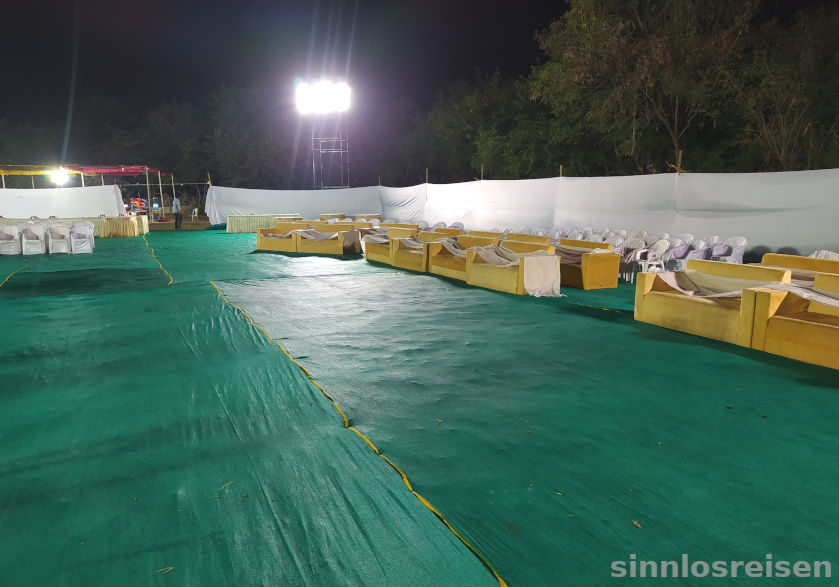
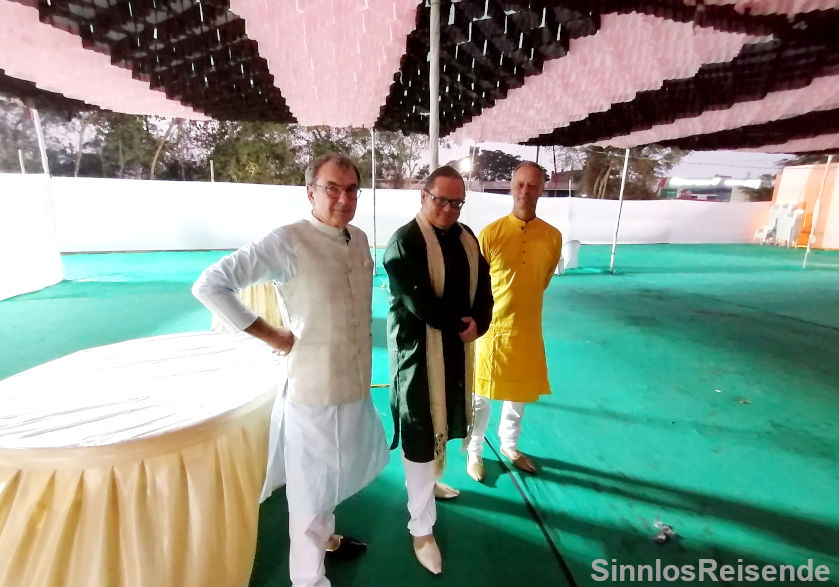
Dark clouds were gathering in the sky, but the day before we had asked a local how likely it was to rain. After all, the celebration was taking place outdoors, so the question was quite justified. The answer was clear: It doesn’t rain in Gujarat in December! Never!
At 7:30 pm, a tropical downpour began, washing the paper decorations off the tables and dissolving my cardboard shoes.
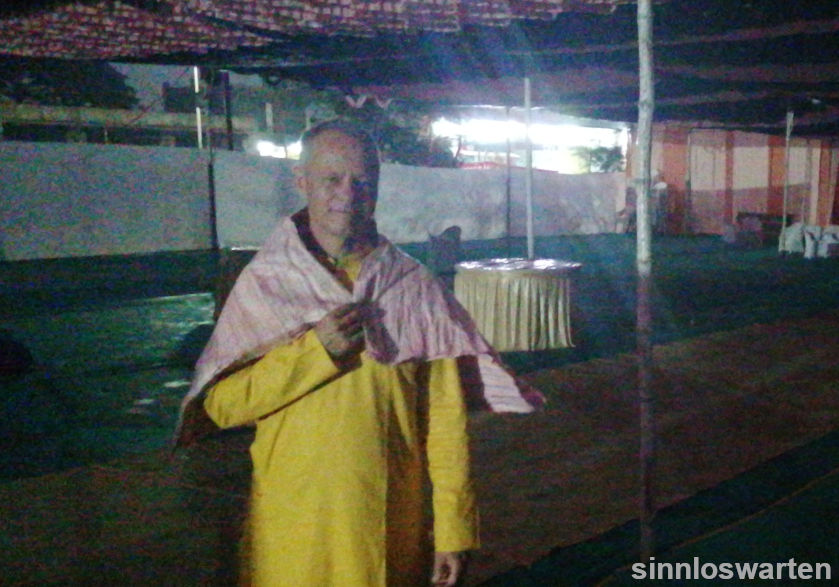
As soon as the rain shower was over, it was blow after blow. Tables and chairs were wiped dry, soggy paper decorations were disposed of, an army of cooks appeared out of nowhere and suddenly the venue filled with the Indian guests who had waited out the downpour in the dry.
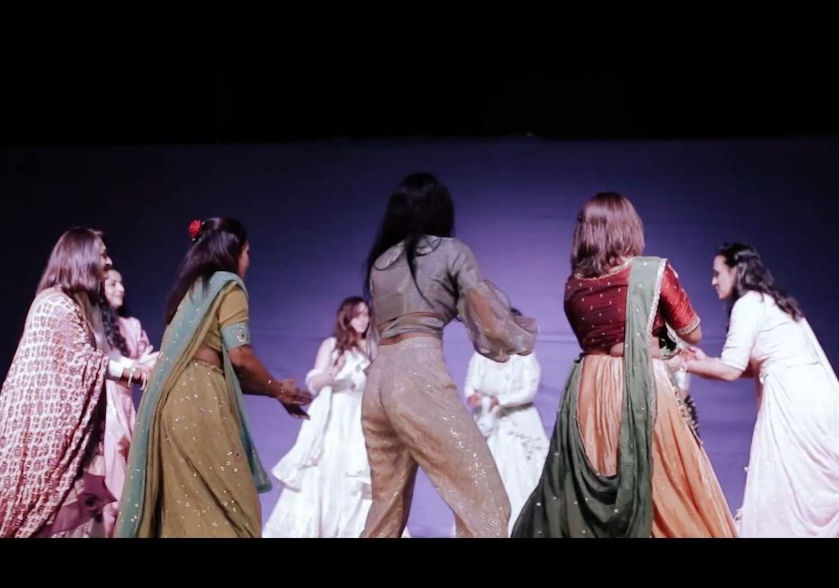
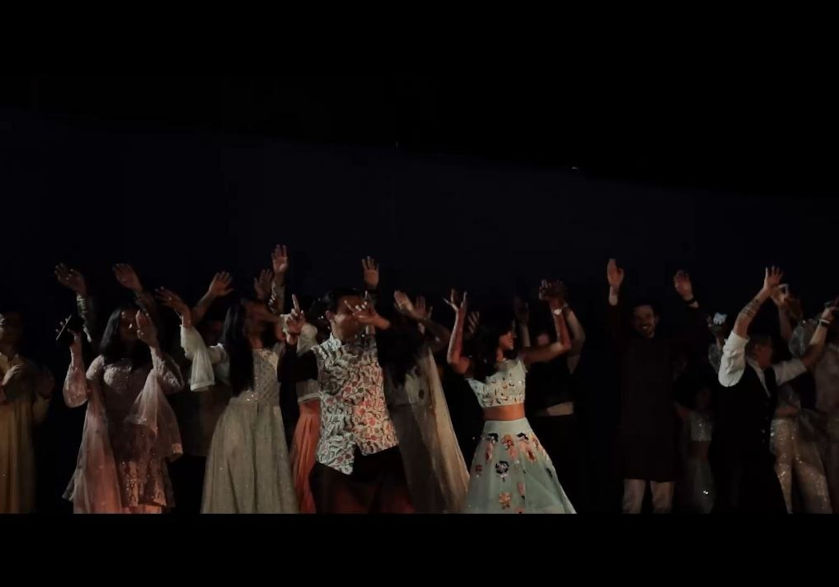
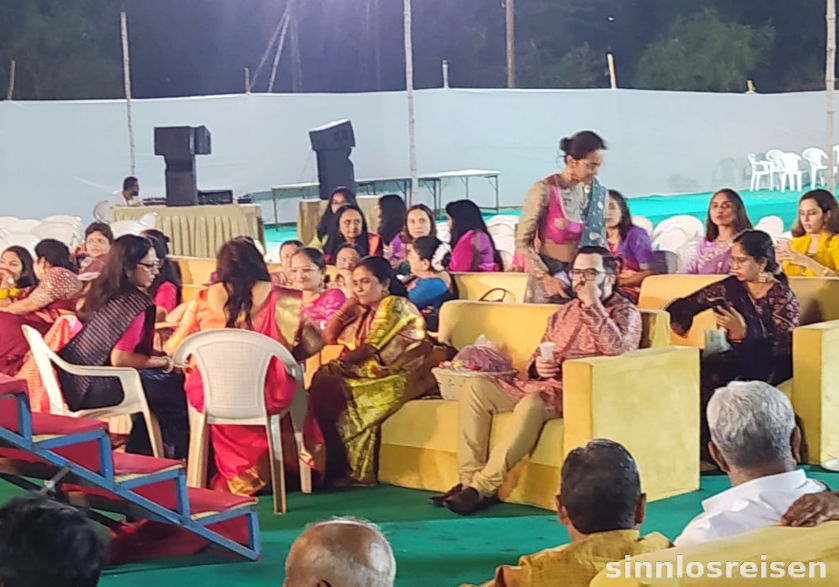
The rest of the evening: delicious food until the kurta was about to burst, impressive dance performances, wonderfully colourful dresses, funny games and dancing to incredibly loud music with a rhythm that was difficult to understand for European ears.
The third day – Baarat
On the third day of the celebrations, we met up with the groom and made a procession to the wedding venue 200 metres away where the bride was waiting. We were intentionally an hour late and were again the first to arrive at the meeting point.
So we had enough time to listen to the band warming up. The band consisted of drummers and a keyboarder who beat out incredibly weird melodies from a mobile organ at an insane tempo. Two speakers amplified the completely overdriven sound to a noise level of over 10,000 decibels. I was glad that we only had to dance two hundred metres this way, because my ears were already hurting after five minutes.
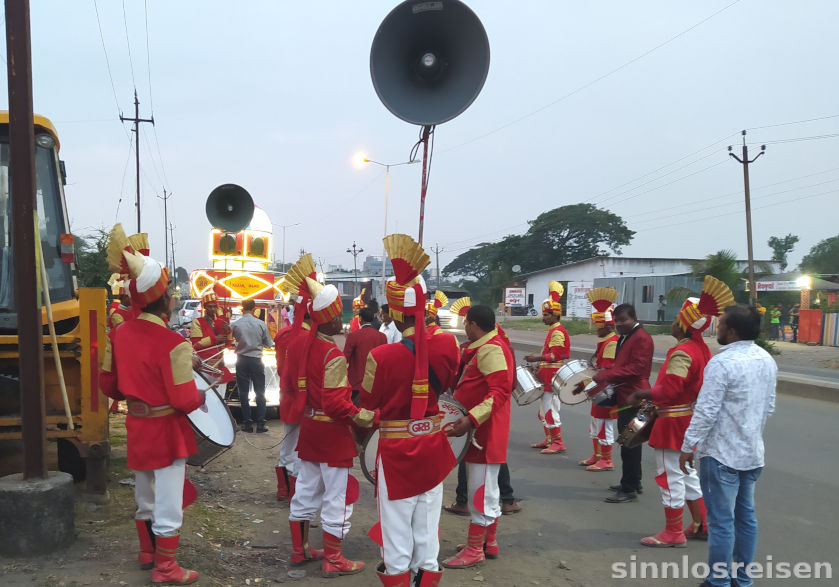
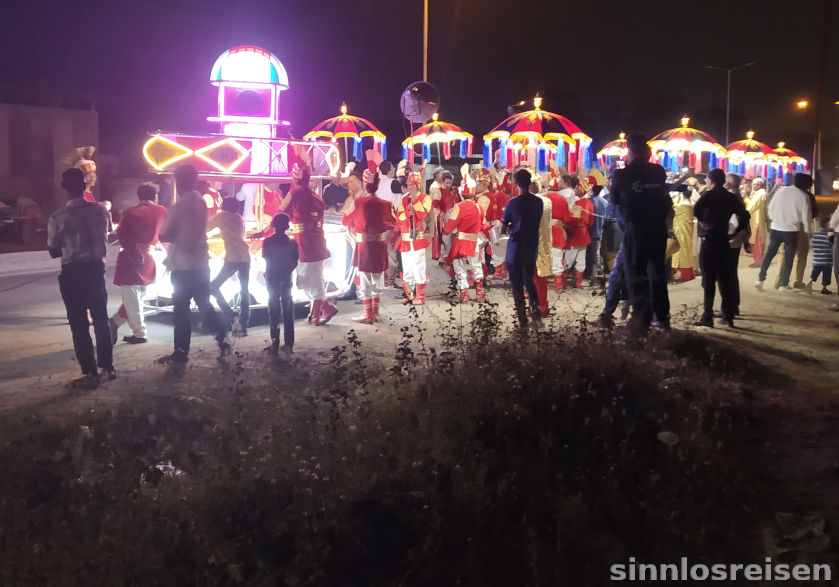

After an hour we had covered fifty metres. I tried to calm my ringing ears behind a truck. Because Mr. SinnlosReisen once again did not rest and unnoticed by his fellow travellers worked absolutely selfless in the service of mankind by taking over an important task as chief of security.

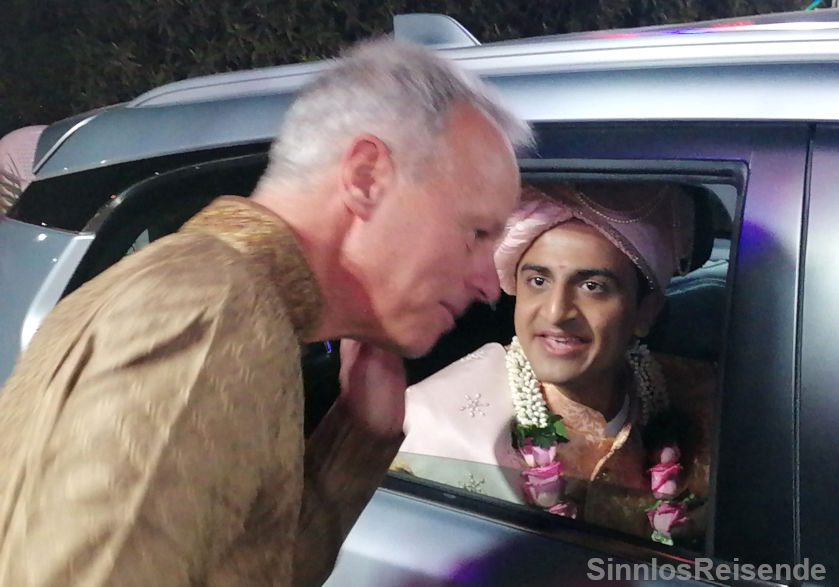
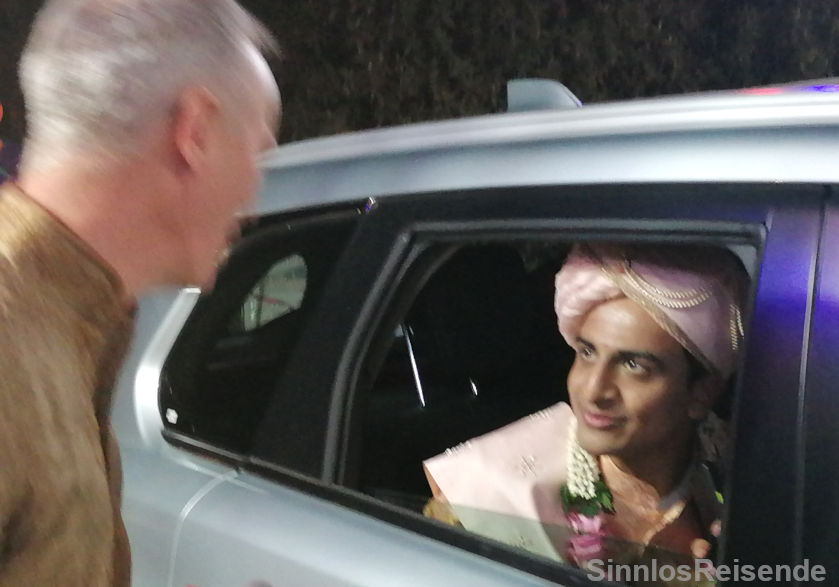
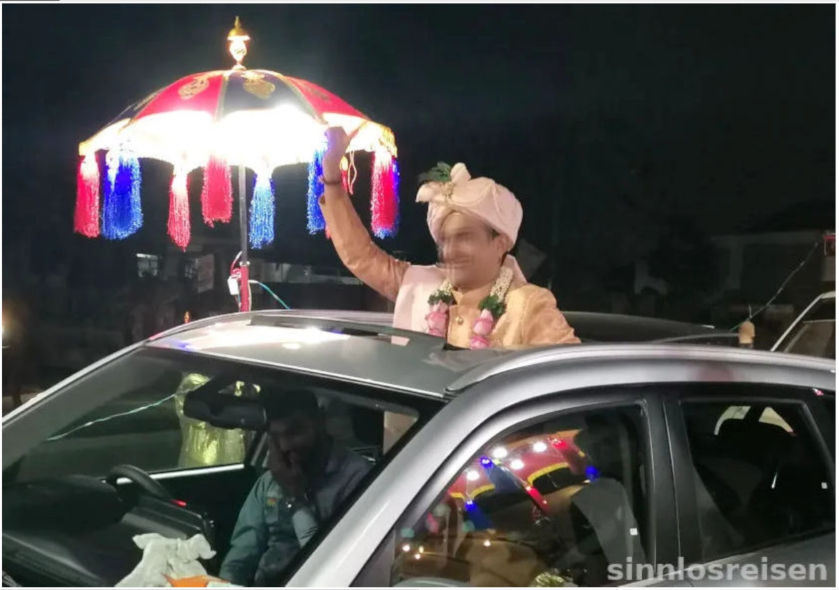
After more than two hours we arrived at the festival grounds where the actual wedding ceremony took place. Unfortunately, I can’t report any details about this, because my view was blocked by five photographers, a cameraman and a drone pilot. But at some point it was official: now they were married.

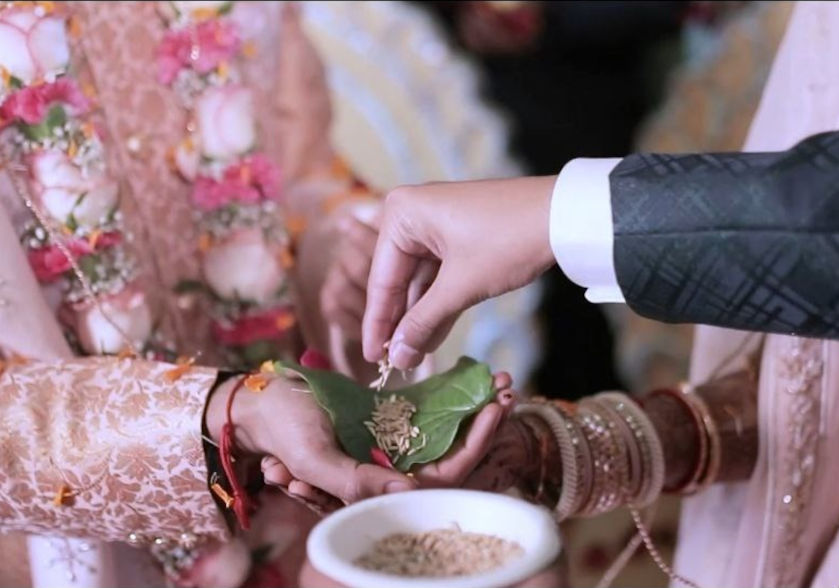
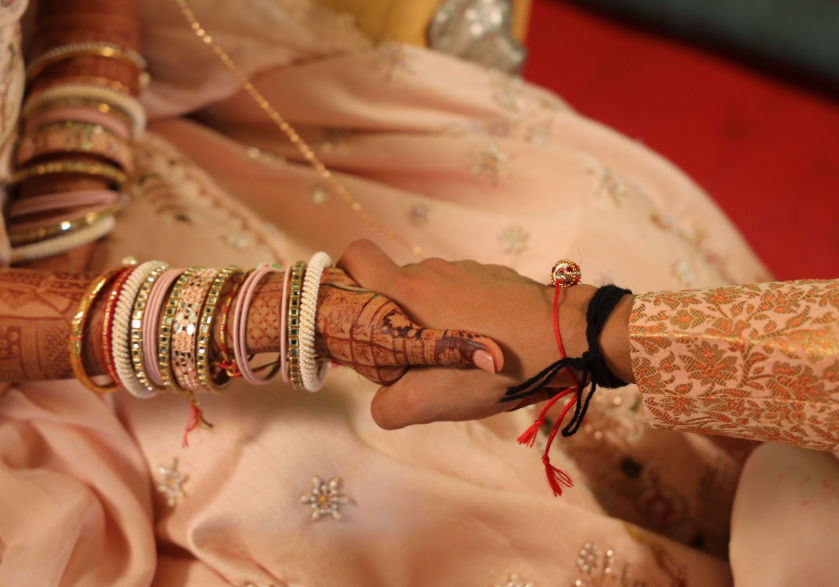
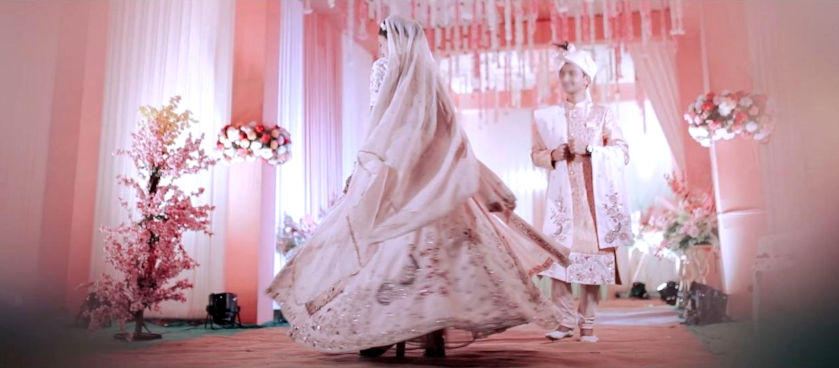
While the bride and groom slowly made their way to the honeymoon, the highlights of the past three days were talked through in the women’s seating group.
For the SinnlosReisende, this great wedding was an unforgettable experience. Thankful to be there and filled with impressions, we made our way to Mumbai, the last stop on our trip to India.
 Sinnlos reisen